
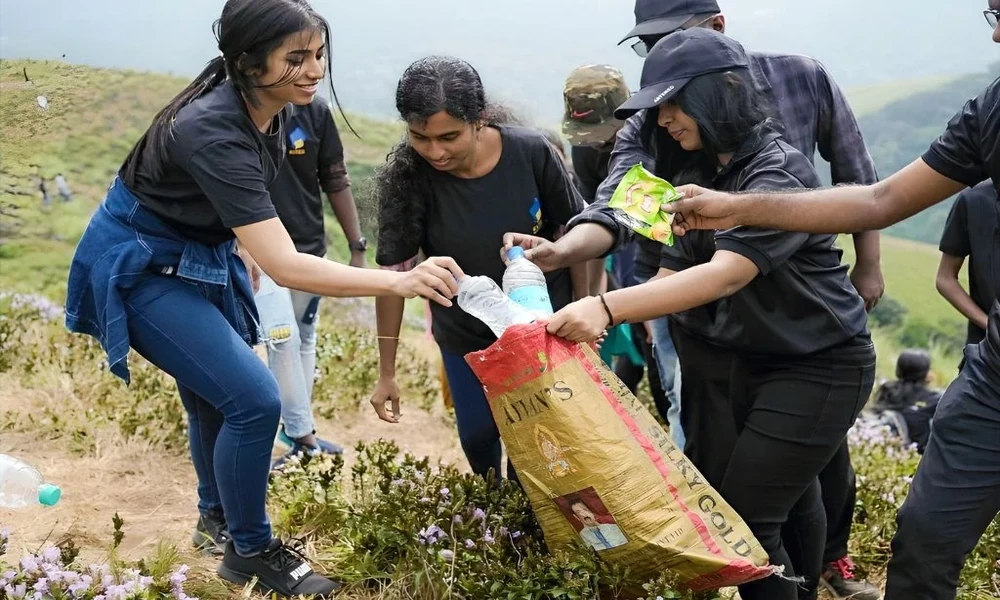

Most women’s health nonprofits are not losing volunteers because their mission is weak. They’re losing them because the path from “I want to help” to “I show up every week” has too many gaps, and nobody owns the job of closing them. If your center is running on a rotating cast of one-time helpers who never come back for a second shift, the problem almost certainly isn’t awareness. It’s the system that takes a curious person and turns them into a committed contributor.
This is fixable. And the fix doesn’t require a full-time volunteer coordinator or a marketing budget that makes your board nervous.
Understand Why Women’s Health Volunteers Are Different
People who volunteer at pregnancy resource centers and women’s health nonprofits are not the same as people who show up to pack boxes at a food bank. They’re drawn by a specific kind of mission proximity. They want to feel close to the work, not just adjacent to it. That’s your advantage, and it’s one that larger, more generic nonprofits cannot replicate.
The practical implication? Your volunteer recruitment messaging should lead with story, not with task lists. A prospective volunteer reading “we need front-desk help on Tuesdays” sees a chore. The same person reading about a client who came in frightened and left with a clear next step sees a reason to show up. Story pulls them in. Then you hit them with the task list, and it reads as a privilege, not a burden.
This is what I call the Trust-Before-Ask framework: lead with impact, follow with the ask, and never reverse the order. Centers that flip this sequence, leading with the schedule and burying the mission, consistently see drop-off at the inquiry stage. Centers that invest 60 seconds of narrative before they describe the role watch inquiry-to-onboard conversion climb.
Fix Your Digital Channels Before You Run Any Campaign
Here’s a number worth sitting with: according to Activate Good’s 2025 volunteering research, over 80% of nonprofits report that email is somewhat or very effective for volunteer recruitment, and social media is growing fastest, with Instagram, LinkedIn, and Facebook all showing measurable gains in volunteer engagement. That’s your channel stack right there.
But channels don’t work if your home base doesn’t work. Before you post a single Instagram story or send a recruitment email, your website needs to do three things clearly: explain who you serve, explain what volunteers actually do, and make it embarrassingly simple to take the next step. If a prospective volunteer lands on your site, scrolls for 30 seconds, and still isn’t sure what kind of help you need, you’ve already lost them.
A few things worth auditing right now:
- Does your volunteer page have a real photo of your center, not a stock image of hands holding flowers?
- Is there a specific, named contact for volunteer inquiries, not a generic info@ address?
- Does your FAQ answer the questions someone asks before they commit, like time requirements, training, and what a typical shift looks like?
- Does your content explain your services clearly enough that a new volunteer feels prepared to talk about them confidently?
That last point matters more than people realize. Volunteers who feel knowledgeable about your center’s offerings become your best recruiters. If they can point a curious friend toward a resource, say, a place to learn more about pregnancy testing at no cost, they’re doing outreach on your behalf without being asked. That kind of organic word-of-mouth compounds over time in ways no paid campaign can touch.
The Onboarding Ladder: A Practical Model for Retention
Recruitment gets all the attention. Retention does most of the actual work. Here’s a concrete scenario that plays out constantly at under-resourced nonprofits: someone signs up, attends an orientation, feels warmly welcomed, and then hears nothing for two weeks. They’re not angry. They just quietly redirect their energy somewhere that feels more organized. By week three, you’ve lost them.
The Onboarding Ladder is a simple five-step sequence designed to close that gap without requiring a dedicated staff person to babysit it.
- Same-day confirmation: An automated email (or a personal text) goes out within an hour of a volunteer’s first contact. It confirms you got them, names a specific person they can reach, and sets an expectation for what comes next.
- Pre-orientation prep: Three days before their orientation, they receive a short, plain-language overview of your center’s mission and services. Not a 20-page manual. Three paragraphs and a short video, if you have one.
- Day-one warmth: Assign a buddy from your existing volunteer pool. Not a supervisor. A peer who’s been there six months and can answer the questions new people are too nervous to ask staff.
- 72-hour check-in: Three days after the first shift, a real person reaches out. A text works. “How’d it go?” is enough. The ask for a second shift comes in that same message, not a week later.
- 30-day milestone: Acknowledge the one-month mark explicitly. A handwritten card is disproportionately powerful here. People remember it.
None of this requires a software budget. A shared Google Doc and a committed volunteer lead can run this entire sequence. But if your center is ready to invest, volunteer management tools can automate steps one through four and free your staff to focus on step five, which is the one that actually builds loyalty.
Stretch Your Reach With Free Tools You’re Probably Not Using
If your center holds 501(c)(3) status and you haven’t applied for Google Ad Grants, do that today. According to Nonprofit Tech for Good’s 2024 guide, the program provides qualifying nonprofits with up to $10,000 per month in free advertising credits on Google Search, which means you can put your volunteer recruitment page in front of people who are actively searching for ways to get involved in your community. That’s not passive brand building. That’s intent-matched recruitment at no cost.
The catch, and it’s a real one, is that the credits only work if your landing pages are well-built and your keywords are tightly targeted. A generic “volunteer with us” page will burn credits with nothing to show for it. A page built around a specific role, say, “pregnancy support volunteer in Elyria, OH,” will convert. Geo-targeting is your friend. So is a clear, specific call to action above the fold.
“The difference between nonprofits that thrive and those that scramble is rarely the size of their audience. It’s the intentionality of how they move people from curious to committed.”
– Community consensus reflected across volunteer engagement research from the University of Maryland’s DoGood Institute and the National Council of Nonprofits, 2022
Build Volunteer Relationships That Last
Long-term volunteers are fundamentally different from short-term ones. They become institutional memory. They train new people without being asked. They donate. They recruit. You want them, and keeping them costs far less than replacing them.
The practical moves here are unglamorous but they work. Give volunteers a clear role title, not just “helper.” Tell them specifically how the work they did last Tuesday affected a real outcome. Invite them into decisions when their experience gives them something useful to contribute. Create a small annual moment, a recognition dinner, a personal note from the director, that signals their contribution is visible at the leadership level.
And when volunteers age out or move away, offboard them well. A graceful goodbye that includes an invitation to stay connected as a donor or ambassador turns departing volunteers into long-range advocates. The relationship doesn’t end when the shifts do.
Volunteer pipeline work is unglamorous operational stuff. But it’s also the difference between a center that survives a rough funding year and one that quietly closes. Build the system before you need it, and the mission takes care of itself.

