
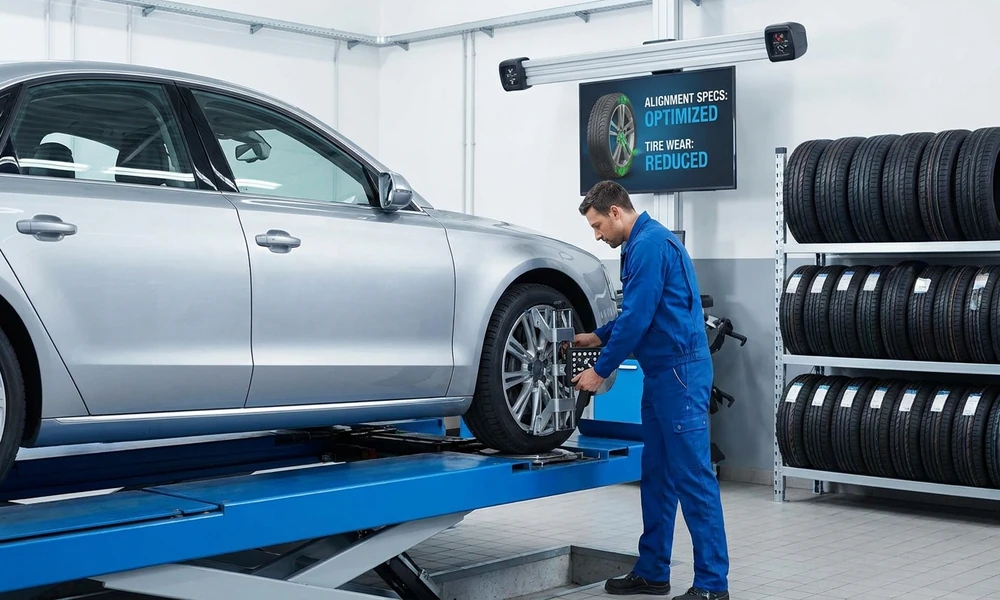

A new set of tires is a valuable investment, but even high-quality tires can wear out faster than expected if the wheels are not properly aligned. Uneven tire wear, poor handling, and reduced fuel efficiency are all common signs that alignment may need attention. Many drivers overlook this maintenance service until tire damage becomes noticeable. This article explains how wheel alignment affects tire life, why it matters for vehicle performance, and how regular inspections help protect your investment.
Proper Alignment Reduces Uneven Tire Wear
Wheel alignment keeps each tire positioned at the correct angle according to the manufacturer’s specifications. For example, drivers purchasing new tires for Cadillac vehicles should also have the wheel alignment checked because proper alignment helps new tires wear evenly from the beginning. Even a small alignment issue can cause one edge of the tire to wear much faster than the rest. Uneven wear shortens tire life and may require replacement long before the tread is fully used. Correct alignment allows the entire tread surface to stay in better contact with the road while helping drivers get the maximum value from their tires.
Better Alignment Improves Vehicle Handling
A properly aligned vehicle feels more stable and predictable while driving. The steering wheel stays centered, and the vehicle tracks straight without constantly pulling to one side. This improves driver confidence during everyday driving and highway travel.
Poor alignment may cause:
- Vehicle pulling left or right
- Uneven steering response
- Faster tire wear
- Reduced cornering stability
Improper alignment also increases rolling resistance, which can make the engine work harder and gradually reduce fuel economy. Correcting these issues helps restore smoother handling while protecting the tires from unnecessary stress.
Tire Performance Depends on Suspension Angles
Wheel alignment involves adjusting suspension angles such as camber, caster, and toe. These measurements determine how each tire meets the road surface while driving. When the angles fall outside manufacturer specifications, tire wear increases because the tread no longer contacts the road evenly.
For example, excessive toe settings may cause tires to scrub across the pavement instead of rolling smoothly. Over time, this additional friction reduces tread life and affects overall driving performance. Wheel alignment helps prevent future uneven wear, but it cannot restore tread that has already worn away.
Regular Alignment Helps Protect Your Investment
New tires perform best when the suspension and steering systems work together correctly. Drivers installing new tires for Cadillac vehicles should consider having the alignment inspected during tire replacement to help maximize tread life. Starting with proper alignment gives the new tires the best opportunity to wear evenly.
Alignment should also be checked after striking large potholes, hitting curbs, replacing suspension components, or noticing unusual steering behavior. Many manufacturers also recommend inspecting alignment during routine tire rotations or scheduled maintenance visits to identify small problems before they become costly repairs.
Professional Alignment Supports Long-Term Tire Life
Wheel alignment requires specialized equipment that measures suspension angles with precision. Professional technicians compare these measurements with manufacturer specifications and make adjustments that improve tire contact with the road. They also inspect steering and suspension components that may contribute to alignment problems.
During an alignment service, technicians may identify worn ball joints, tie rods, bushings, or suspension parts that affect tire wear. Correcting these issues early helps protect tire performance, improve handling, and support safer driving throughout the life of the tires.
Wheel alignment plays an important role in extending tire life and maintaining consistent vehicle performance. Proper suspension angles help tires wear evenly, improve handling, and reduce unnecessary strain on steering components. Combining regular alignment inspections with routine tire maintenance allows drivers to protect their investment and enjoy safer, smoother, and more efficient driving for many miles.

